When South Korean President Yoon Suk Yeol suddenly declared martial law on the evening of December 3, 2024, the country plunged into uncertainty and chaos. Extraordinary images of Korean citizens congregating outside of the National Assembly building filled the news. Six hours later, thanks to the heroic efforts of lawmakers who protected the National Assembly and held a vote in the middle of the night rejecting it, Yoon’s martial law declaration was lifted.
On TikTok, Jinwoo Park started releasing videos explaining the fast-moving situation, adding context and nuance to the news coming through regular media channels. The videos helped convey the shocking and historical nature of Yoon’s actions but also showed the deep connection Park maintains with South Korean politics, history, and culture.
Born in South Korea, but based in Montreal, Park is a vibrant voice–a bridge of sorts–between South Korean history, culture, in particular literature, and a growing global audience on TikTok. After South Korean writer Han Kang was awarded the Nobel Prize in Literature in October, Park dedicated multiple videos to her work and the significance of her win. Many of Park’s videos also deal with writing and the writer’s life. It is through these videos that TikTok viewers followed the journey of how his first novel, Oxford Soju Club, went from manuscript to its upcoming publication in September 2025.
Park’s writing voice is evident in his eloquent and insightful commentary, but his sense of justice, his honesty about his roots and experiences as an immigrant, and, in particular, his humour, shine through. As a Venezuelan immigrant trying to find my way as a freelance writer, Jinwoo Park’s videos about his life as a writer offer a respite from the doubts and the loneliness of that dream. His contagious enthusiasm, profound love of literature, and the way he engages with writers and their ideas in his everyday life echo my daily search for learning and understanding through beauty and art.
I sat down with Jinwoo recently to talk about his journey as a writer, the exhilaration of the imminent publication of his novel, and his thoughts on BookTok and its role in helping people discover or rediscover their love of reading.
***
Andreina Romero: Hello Jinwoo, thank you so much for taking the time to talk to me. Congratulations on your upcoming novel, Oxford Soju Club, I’m so excited to read it! I was watching one of your early TikTok videos, and there was one called “Why do you write?” In that video, you said, “I never became a writer because I wanted to make money writing marketing content for tech. I became a writer because I wanted to write stories. So now I think, as long as you are writing what you want to write, you are a writer. I’m not fully convinced by that, but I can live with that definition a lot easier than ‘you are not a writer if you’re not making money from your published novels.’” How does it feel to look back at those words about how you shifted your thinking about what being a writer is now that the publication of your first novel is on the horizon?
Jinwoo Park: I can’t believe I wrote that. It’s like, whoa, who’s this guy? Sounds so smart. It doesn’t sound like me [laughs], I stubbed my toe this morning. Anyways, I still think the same, to be fair. Even if I wasn’t making money through books, I think all that really matters is your spirit of where your inspiration comes from and what drives you to write. And for me, that has always been this motivation to tell stories. I think that’s also why I’m so keen and passionate about telling Korean history stories through my content.
And trust me, there is no guarantee that this book will make me any significant amount of money–I’m not pretending that this is my golden ticket out of the day job cycle. Day jobs are great; they keep me grounded, and as you know, regular income is such a hard thing for a lot of writers, especially fiction writers. But I think writing is one of those professions where making money does not have to be a requirement to justify your status as a professional. I really think so because in the market of supply and demand, what we write may not have value to a lot of people, and I think that’s something that we come to a quick realization of. But what defines a real writer, in my opinion, is what happens after that. Once you step past that point where you realize, oh, what I want to write may not have value to people. So, do you say, well, I’m going to stop and do something else? Or do you say it has value to me, so I’m going to keep going. And I think that’s what defines what a writer is.
I’ve always done this with no expectation of monetary gain in return. And I’ve always done this with the desire to tell stories first of all, to myself, because my motivation for writing has always come from, well, where is the story going? I want to know how this book ends, so, I’m going to write until the end of the book. And then the characters that are in the book suddenly come alive in your head. What is their life going to be like? What are their average moments like? What do they think about when they’re brushing their teeth? These are the kinds of curiosities that I get whenever I write. Those are the things, the literary curiosity that you get for storytelling and it’s about prioritizing that value and that passion for it.
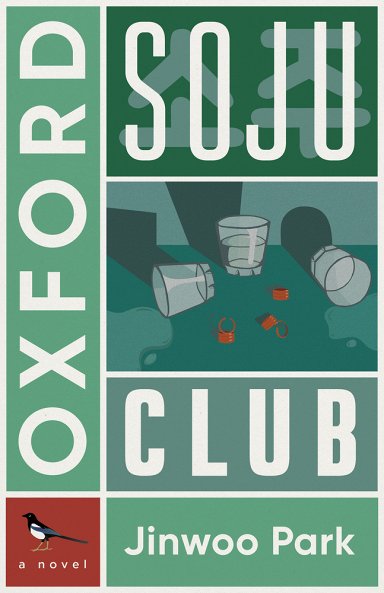
AR: I’ve been watching your videos for about two years now, and when you made the announcement that your first novel would finally be published, I was so excited. You explained it had taken you “six years of trial and error” and almost declared it a practice run or drawer novel. What made you keep working at it? How did you stay motivated to continue to write and rewrite?
JP: So, in my case with Oxford Soju Club, I wrote the first draft of it back in 2018. To give a little bit of background: 2018 was when I had gotten out of a bad layoff from a company that I really thought was a place where I would stay for about five years. I had gotten laid off and then, I was just kind of lost about what to do. And then I remembered that I hadn’t written anything since I graduated from my master’s in creative writing. And I thought to myself, where did that writer guy go? I need to get that guy back because that guy was fun. That guy was great. So, I told myself, I needed to write something.
NaNoWriMo (the National Novel Writing Month event where writers are encouraged to write their novels in the span of one month) was coming up around that time, and I thought to myself, I’m just going to write a book. It can be anything. I’m just going to write something. So, at the time I wanted to write a spy thriller, but in a very Hollywood sense. I wanted something that was a cross between Rush Hour and 007.
In Korea, there’s this whole genre of films that I call the “North and South Korean team up” genre, which is where North and South Koreans team up and we work together because we’re brothers and in the end, we’re all the same people, and that appeals to a certain crowd and definitely appeals to me. So basically, I wrote a spy thriller that was very Rush Hour buddy cop-esque, and it featured a South Korean spy and a North Korean spy who worked together to chase down a nuclear scientist who’s on the run. And there’s a little girl because you always have to save a little girl in these things. There were car chases, shootouts, and backflips; there were all sorts of things, and it was a mess [laughs]. But it was absolutely fun. It was as if a 12-year-old had tried to recreate a 007 book. That was what it felt like, and I got my fun out of it. And then I thought, okay, I’m going to now write something more serious. But then, within the whole spycraft and pretending to be somebody else, I realized that there’s a story about the diaspora metaphor that could be really useful about how, as the diaspora, we do not actually wear true selves out to society, out to our adoptive society. We always keep our true selves held close to our hearts, but we never really reveal it in a way that would be revealed if we were with our own people back home.
I thought to myself, okay, that is a story I want to tell. So, I tightened up the story and I basically made it more about the characters. After about two rewrites, it won the Jim Wong-Chu Emerging Writers Award from the Asian Canadian Writers Workshop. They are based out of Vancouver. And big thanks to Allan Cho who leads the group right now and everyone involved in it, because that was the first validation I’ve ever had on my writing, and it meant a lot.
AR: I love how you described the story of the novel and how you said that you had been inspired by two genres of film: “the buddy cop” film and the “South and North Korean team-up” film. It feels sometimes like genre in film and literature is sometimes considered less than–less intellectual, less literary, easy, not Oscar-worthy, not serious. What about “genre” attracted you and what attracted you specifically about the two genres that inspired the book?
JP: Well, the answer is simple: because it’s fun. I hate writing something that isn’t fun. And I’m going to be honest here. Sometimes I read literary novels or collections and I just feel like, how did they write this thing? This is so boring. This is so boring to write, to me at least. What is so interesting about you sitting in this house in the middle of the prairies, having very trivial drama with your family members or friends. Having some odd conversation with somebody in a cafe? What is so interesting about this? [laughs]
So sometimes, I just look at that and I think, “I can’t stand it.” I cannot stand writing something boring. So, this is why, when I try to write literary fiction, I just find myself so bored. I think that’s why I didn’t write for a long time after I graduated from my creative writing degree because there was this general favouring for upmarket, literary fiction. And I thought to myself that, well, this is not fun at all, and I think that’s what helped me with this book. It was so fun to write. There was nothing but fun, to be fair, in the beginning. And then afterwards, it became fun in different ways, where I explored each character a lot more deeply from multiple directions and examined their relationships with each other, their interactions, how their special, unique personalities come out in front of different people, and that was a different kind of fun.
But my plans for writing are not to care about what genre I’m in. I think after the second manuscript, I’m planning on writing a sci-fi series that I’ve been thinking of. There’s a fantasy novel series that I really want to do as well. There are all sorts of things that I want to do that may be considered genre, but I don’t really care because if it’s fun to me, that’s what matters. And that’s also where I just don’t care about the money at this point because it satisfies me first. So, I think that’s my way of approaching it, that it doesn’t matter what the genre is, as long as it feels fun for me, it’s great. And whether it is classified as literary or not, it’s not up to me, it’s up to other people.
I think in this case, for [Oxford Soju Club] at least, it is very literary because there are those in-depth conversations and those very careful examinations of the diaspora condition, but I am not going to go out and say that the espionage part is not there and that this is a purely literary novel because that’s not true either. I want people to have fun while reading this book. I want people to be able to enjoy it. I want people to be able to enjoy it in a way where they read literary novels, but I also want people to be able to enjoy it on a very surface level, too, and that would be great. That would be fine for me as well. I don’t want people to write an essay on this book. I just want people to read it and go, “Man, that was a great story. Those are great characters. I want to see more of them.” That’s all I need. Even if they hate them, I’m okay with that, too!
AR: I want to talk about TikTok and BookTok specifically which has contributed to changing the way people read and find books today and has become incredibly influential in the book industry. How did you start in BookTok? What made you decide to start recording videos? And how did you get so good at it?
JP: [laughs] I think, by this time I cannot say that I completely belong in BookTok because I’ve gone over to the KoreanTok so much. But I also have to say, I didn’t know too much about BookTok when I came in. I basically started TikTok with this sense that I just want to talk about the books I like. And they were not BookTok books. I think the first book that I did when I started three years ago was Han Kang’s The Vegetarian, and nobody was really talking about that book on the platform then. And then I talked about The Orphan Master’s Son by Adam Johnson. I even talked about books like [Viet Thanh Nguyen’s] The Sympathizer and Less by Andrew Sean Greer. Those kinds of books. And I just kept on talking about the books I liked. I didn’t really look at what was hot on BookTok. Because first of all, it’s a lot of time to read, and as someone who has a toddler, and a day job and all these kinds of things I need to do, I just don’t have that time. So, I thought to myself, I am never going to follow the trend unless I like it unless it seems interesting to me.
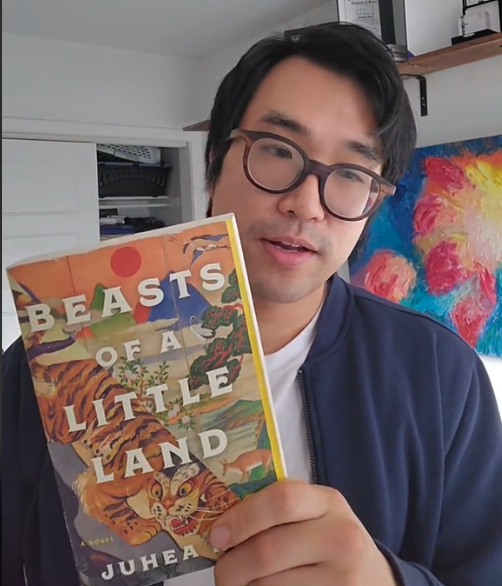
So, I just made that vow to myself. I don’t have much thought on BookTok in that sense as a BookTok creator, except that I will always cover books that I like. And most of the time it’s either Korean literature or diaspora literature. People like Juhea Kim or R. O. Kwon, those kinds of authors who are doing amazing work, not just in diaspora circles, but also in Korea as well. Juhea Kim’s Beasts of a Little Land is a bestseller in Korea.
But other than that, I know what people say about BookTok, which is that a lot of them are very shallow, a lot of them are just filled with what is essentially porn on the page [laughs]. And I have to say if it gets people reading, I am all for it and I do not care what it is. I don’t care if BookTok pushes shampoo bottles and then shampoo bottles get really popular. I don’t care as long as it gets people to read. Reading is a habit that needs to be developed through wanting to read something. That is the first entry point. So, I don’t care what the gateway drug is, just get them through the reading door. I don’t care if it’s actual pornography on the page. You know what? I prefer it if people are reading porn instead of watching it. I think that is a much more sophisticated experience than watching porn. So, those are my thoughts on BookTok and…
AR: [laugs] That’s going to be the quote!
JP: Yes, please, I would gladly stand by that. I will defend that to the grave! [laughs].

AR: You are such a great speaker; I can see it just having a conversation with you. You have an ease in organizing your thoughts in a clear way. Not everybody has that. Do you write a script? Do you consider these videos part of your writing work?
JP: Definitely. I think I only sound very well put together because I write a lot of it beforehand, and if you see all my videos, I am looking at it you know, I’m looking at the script as I’m saying these things because it’s long and there’s a lot. And that’s sort of my strength, the ability to carefully organize a script into place. And I consider that definitely my written work as well. I mean, sometimes I repost the scripts that I wrote onto places like BlueSky in threads, and they do very well. I think spoken or written, the words you put out are the words you put out. So, for sure, I do consider this as a part of my writing work. And by that, I’ve written a lot of words for TikTok!
AR: The last topic I want to talk about is BTS and RM. I discovered your TikTok thanks to your series of videos about his album Indigo. I became a BTS fan in August 2022, and he released Indigo in December. So obviously, I love his music but after listening to this album, I very quickly understood that he’s a writer, writer, as in “This person is a musician, but this person is a writer as well.” In one of your videos about Indigo, you said that the lyrics book was like a “poetry chapbook” and you also talked about RM’s “respect of the art of the written word.” Can you talk about RM and what you appreciate about his writing and RM’s significance for South Korean culture?
JP: I think, in many ways, RM is sort of the evolution of the standard South Korean singer-songwriter in that he is not only an idol, but he works on the track, so he has a lot of similarities to G-Dragon from BigBang. But what I don’t feel from G-Dragon that I do feel from RM is this very careful consideration for the words as well as enjoyment out of those words. And by that, what I mean is that it’s not that GD doesn’t enjoy the lyrics that he writes, but there is also this very free-flowing playfulness that RM does with his words that comes from understanding multiple different languages. He leaps over English and Korean very easily, and he understands the context from both sides as well. And then he mixes them together. So, there’s this sense of linguistic playfulness that he applies to his music. And that’s a very writerly thing to do. This is kind of the reason why, whenever people say, “Why did Bob Dylan get the Nobel Literature Prize?” I say, because it’s all the same thing. Lyricists also wrestle with words, and that’s literature. So that’s what RM is to me, and I’m sure there are plenty of people out there who do the same thing as he does in Korea, but he’s just the biggest person who does it right now.
And I’m so glad that a person like him, who could literally do just anything at this point and his following will go along and say, “This is great!” And so many artists, when they come to a position where they could be anything and where they could do anything, they just fall back to the mainstream for some reason, and they just do the most radio-friendly things. But I think, in a way, RM just does the opposite, where he just goes and says, “I’m going to do the art that I believe is unique to me.” And he constantly searches for it. Obviously, he takes references, and he takes inspiration. He mixes, cuts and pastes. But he’s constantly trying to get to that place where [he asks] “What is my music?” And that’s something that I really respect for any artist. The sense of, “Who am I as an artist? What is uniquely me?” And he’s constantly trying to go there. And that’s, in my opinion, what really distinguishes him from not just other idols but other musicians in Korea.
Jinwoo Park’s debut novel Oxford Soju Club will be released on September 2, 2025. Click here to pre-order it. You can follow Jinwoo Park on TikTok, Instagram, and YouTube. Or you can visit his Linktree.
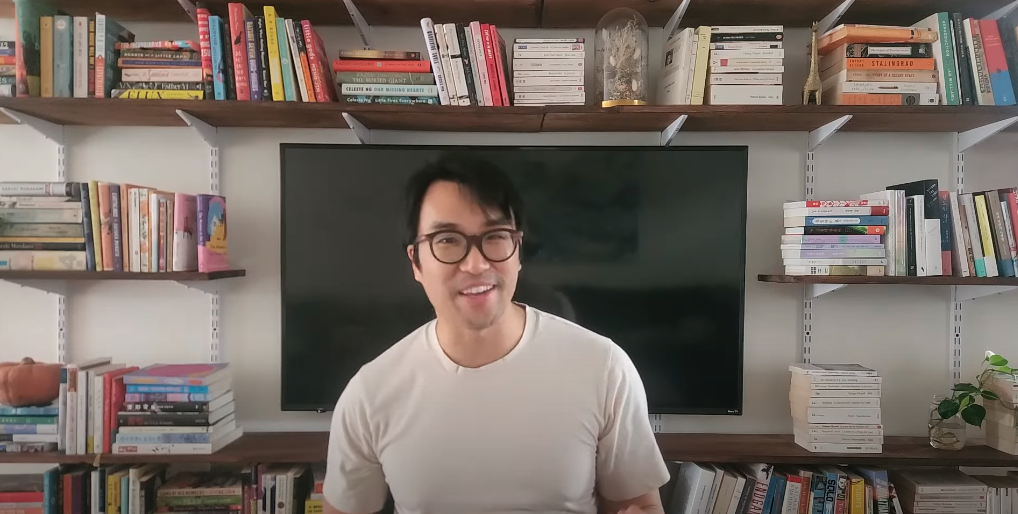
Featured photo: Screen capture of Jinwoo Park’s YouTube video “Which Han Kang Book You Should Start With.”

 The Things We Love