It took 20 years, but I finally got to see Pearl Jam in concert for the first time last week. The experience was so beautiful and powerful that it has stayed with me for many days. It also made me realize one thing: even though I love many, many things, and I enjoy and love many types of music, I remain a rocker at heart.
The call of the sea. It promises solitude, adventure and a profound connection with nature both at its most beautiful and peaceful and at its most awesome and terrifying. All Is Lost, a new film by J. C. Chandor, fulfills all these promises while offering a compelling commentary on the indifference of nature and of humans.
A few weeks ago, I went to my local library. I had to return a book, my third in a row from Rachel DeWoskin. I had tried unsuccessfully to renew it for a second time, but to my horror, somebody had dared to put a hold on it!
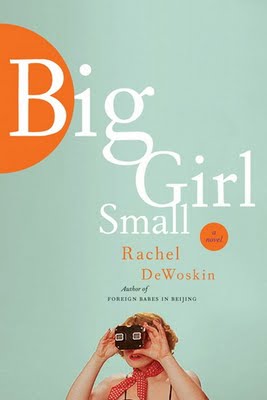
“Can you fall in love with a writer at first read?” I asked myself when reading the first few lines of Big Girl Small by Rachel DeWoskin. I am usually wary of things that are too easy to like, of too good first impressions, but the beginning of this book is so strange and engaging that after two paragraphs, I was already telling myself, “Um, I think I’m going to like this book very much.”
If you are a music fan living in the Pacific Northwest, chances are you have seen a show at the Gorge Amphitheatre. And if you are lucky enough to have experienced a show at the Gorge, you know the trip there is absolutely worth it. Indeed, this venue is such a special and beautiful place that people travel hundreds of miles just to go see shows there. The Gorge has also become a sort of gathering place for Dave Matthews Band fans for their annual Labour Day weekend shows, and the Sasquatch Festival is held every Memorial Day weekend.
Bill Cunningham New York is a small documentary, its subject deceptively small as well. Mr. Cunningham is a fashion photographer in New York. At the time the documentary was made he was 81 years old. For over three decades, he has biked around the city, photographing fashion and street life. He has two columns in the New York Times, one about street fashion and the other about social life in New York.
The Grab & Go! series by my local library in Port Coquitlam, BC.
I love my local library. A few weeks ago I went there to return a big pile of DVDs and children’s books. As I was leaving, I noticed these large, brown bags lined on the main counter. They looked like big, wonderful presents waiting to be picked. They all looked the same, except for a sticker on the top with the description of what may be inside: Novels, Non-Fiction, Gardening, Cooking & Crafts, Science Fiction. It’s Grab & Go!, titles picked by the library staff and put together in mystery bags for lazy readers like me. What a wonderful idea! And I’m their perfect audience: I’ve been relying in the last several months on the library recommendations, the new arrivals section and the odd recommendation by a friend or family member. I just don’t have much time to read anything at all, and that includes book releases and reviews.
I am a Harry Potter fan. At the insistence of my mom, who was aware of the books very early on, I started to read the series and soon became a fan as did almost everybody else. It was great to dive into Harry Potter‘s world and to engage in the cultural conversation with my mom, my sisters and, seemingly, the rest of the world.
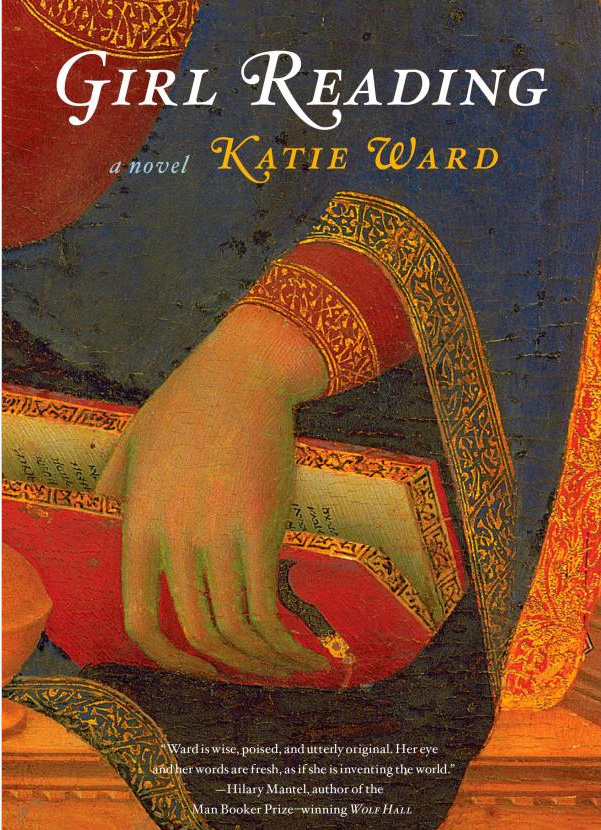
One of the privileges of youth is time. Yes, we are all handed the same amount every day; it’s just that, as we get older (and especially after having children), we fill ourselves with so many responsibilities that some things start to get thrown out of the window (in my case: exercising, listening to music, reading anything longer than gossip blogs and Twitter feeds, sanity, at times). It’s not completely negative; having “less time” has forced me to become more decisive and more practical. I’m still hugely indecisive and unpractical, but I’m a little bit better. So for the last couple of years, when I go to the library, not having had any time to read book recommendations, I’ve been relying on the library staff’s last-release suggestions. I have found some very good books this way and also, like most people, by totally judging books by their covers: my weakness is books with paintings on them. One of these was Girl Reading, by Katie Ward.
More than a novel, this book reads like a collection of short stories very delicately tied together by images that appear in each of them. The stories start in the 14th century and move through history until we reach the late 21st century. The beautiful cover of the edition I read shows a detail from Annunciation by Simone Martini (1333). “Annunciation” is also the title of the first chapter. The first story takes place in 1333. A young woman, an orphan living in a convent, is chosen to sit for a master painter. She doesn’t understand until much later that she will be the model for the virgin in the painting, the same one that we see on the cover. Ward plays with the themes of the painting (the annunciation, immaculate conception), and they become part of the story itself in a very subtle, but smart way. And so it is for each chapter, where she imagines the story behind the images, the circumstances that may have led to its creation.
Ward writes with a beautiful lightness of touch and seems not only able to capture the time period of each story but inhabit the images and paintings that we associate with it.
In “Angelica Kauffman: Portrait of a Lady, 1775”, she writes about a bereaved lover consumed by the sadness and loneliness of death. She is a countess, though she has lived away from her husband for quite some time. Her beautiful lover has recently died. She summons the famous painter Angelica Kauffman to complete the portrait she had started of her lover, the subject of Kauffman’s Portrait of a Lady. Ward is wonderful in that she gets the time period, the history, the manners, in just a few pages. The poor countess falls from society when one of her many creditors accuses her and her lover, Frances, of being lesbians. Kauffman has been a friend to the countess and remembers Frances when she was alive. The days go by while she tries to finish the painting from memory and as the countess slowly starts to heal. It’s a very moving story about love and loss and perhaps also about the healing power of art.
The most thought-provoking story is the last one. It takes place in 2060. By this time, governments had to lock and protect most Western art due to some sort of international conflict where art was mostly kept in private hands. So most people’s experience of art, books, sculpture–everything, is virtual. Life is experienced in large part through a highly enhanced virtual reality called “Mesh.” Children’s lessons at school are in mesh, games are in mesh and pets, of course, are virtual. It is not only about a world where you can live away from your family but still be present through your highly realistic avatar, but also about a world where material objects and the pleasures of touching, feeling and seeing in the real world are becoming rarer and rarer. This doesn’t sound unfamiliar: we already seem to have access to everything we can imagine on the Internet, but at least we can still experience some real art in the real world if we choose to.
The story touches on the theme of identities as well, both our virtual identities and our real identities. Sibil, a new scientific creation, is at the heart of the story. She is not a robot, but she is the definition of artificial intelligence: a complex, extremely advanced algorithm. She organizes and classifies information in a way that allows people to experience works of art in a highly interactive way. Through Sibil, a work of art is enriched by all the traces of information that could possibly be attached to it, and this shapes each viewer’s experience. I already feel overwhelmed by the vast amount of information we are exposed to daily, so I can’t imagine how we will manage in 2060. I guess that’s the brilliance of Sibil’s discovery. In the end, Ward finds a way to link all the images and the stories together through Sibil.
Every once in a while, when I was reading the book, I would turn to the end and look at Katie Ward’s picture and bio: she was born in 1979 and this is her first novel. It’s an admirable accomplishment. Her book is beautiful, touching and erudite. I really enjoyed it.
I recently won a movie pass from one of the best video stores we have in the city. I’m subscribed to their newsletter, and it’s pretty easy to enter your name in the contests and win them. The only problem is that if your name is selected, you must be one of the first 20 or the first 10 people to go get the pass at their store, first-come, first-served. Their store is not near my house by any means, so a few weeks ago, when I won a pass to see the French movie Rust and Bone, I had to take extraordinary measures to go get the tickets, which basically means I escaped work one Friday evening, called my husband to tell him there would be no dinner for at least the next several hours, waited in the wind and the cold for a bus and went to get the tickets at the store. There was a lineup when I got there. I had phoned earlier, just before leaving work, and they told me that “only 5 left!” and to “hurry up!” I feared and already hated every other winner who may get the passes before me. Thankfully, there were enough left when I got there, and I got mine. I was so happy, and I invited my husband on a date to see the film.
Rust and Bone is a love story, a redemption story about overcoming tragedy and survival. It starts with a loser: his name is Ali, and he is making his way to his sister’s home to live with her. He has a young son, 5 or 6 years old, and has separated from his child’s mother. He is starting a new life in a different town. His sister is generous; she takes them both in and becomes a mother to the child. But they are not well-off by any means: she is a cashier at a supermarket, and her husband drives a truck to make deliveries. Ali is certainly clueless about his son: he doesn’t know him, doesn’t know if he used to go to school before they left or knows what he likes. But he tries to make a life for both of them.
Ali takes care of his body, which is the one thing he knows how to do, so he runs, goes to the gym and eventually finds a job as a security guard/bouncer at a club. He has a chance encounter with a beautiful woman, Stéphanie, who is involved in a fight at the club. We gather that Stéphanie is unhappy in her current relationship. She works as a whale trainer at a water park. Later, she suffers a horrible accident where she loses her legs. And then, the real story of the movie starts.
Stéphanie goes through a long depression, but one day, she calls Ali, and they reconnect. They live in the south of France, so they go to the beach. One of Ali’s qualities is that he doesn’t make a big deal of Stéphanie having lost her legs; he doesn’t pity her and simply accepts her reality. In one beautiful scene, Stéphanie finally decides she wants to go for a swim. Ali helps her get in the water; she doesn’t have a swimsuit, but that doesn’t stop her.
Marion Cotillard is probably one of the most beautiful women in cinema today, and she is as sublime as Stéphanie: she is subtly defiant, a fighter, but never aggressive. Before her accident, Stéphanie was used to being beautiful and admired. She was the type of person who goes through life knowing the effect they have on other people. It’s beautiful to watch. Ali is also a fighter, literally. He likes to watch ultimate fighting and eventually starts fighting himself. It’s gruesome to watch. But he is good and starts making money through the fights.
Like many movies about boxers and fighters, we see how sad their life can be. We see him destroy his body for the sake of a few euros and make many mistakes along the way, especially with his son and his family. But fighting is the one thing he knows how to do, which he is good at. And in the end, it’s his physical brutality that saves his son’s life and his own in every sense.
In between, Ali and Stéphanie come together romantically, but their relationship is presented in the least romantic and sentimental way possible. In an interview Marion Cotillard did recently, she spoke of how difficult sex scenes are always for her. The exception, she said, were the sex scenes in this movie, which she cherished for the sake of her character, who has gone through so much pain and trauma. Those scenes, especially the later ones, are unforgettable and truly special. This is brave filmmaking, unsentimental and honest. I’m so happy I took my husband on a date to see this movie; he loved the cinematography. And I did, too.






 The Things We Love