Narcissus was analytical, a thinker; Goldmund, a dreamer with the heart of a child.
Field and heath lay before him, dry, fallow stretches and dark forest. Beyond it might be farms and mills, a village, a town. For the first time the world lay open before him, wide and waiting, ready to receive him, to do him good or harm. He was no longer a student who saw the world through a window; his walking was no longer a stroll ending in the inevitable return. […] He was small in this large world, no bigger than a horse, an insect; he ran through its blue-green infinity. No bell called him out of bed, to mass, to class, to meals.
Herman Hesse, Narcissus and Goldmund
My dream was to walk like Goldmund had done it, along fields, towns, and forests, with only my feet and my heart’s desire as a guide. The dream—a deep-seated need—was to be unencumbered by time and responsibilities, my only task to walk, think, and observe, to achieve, like a child, a simple and pure state of being.
***
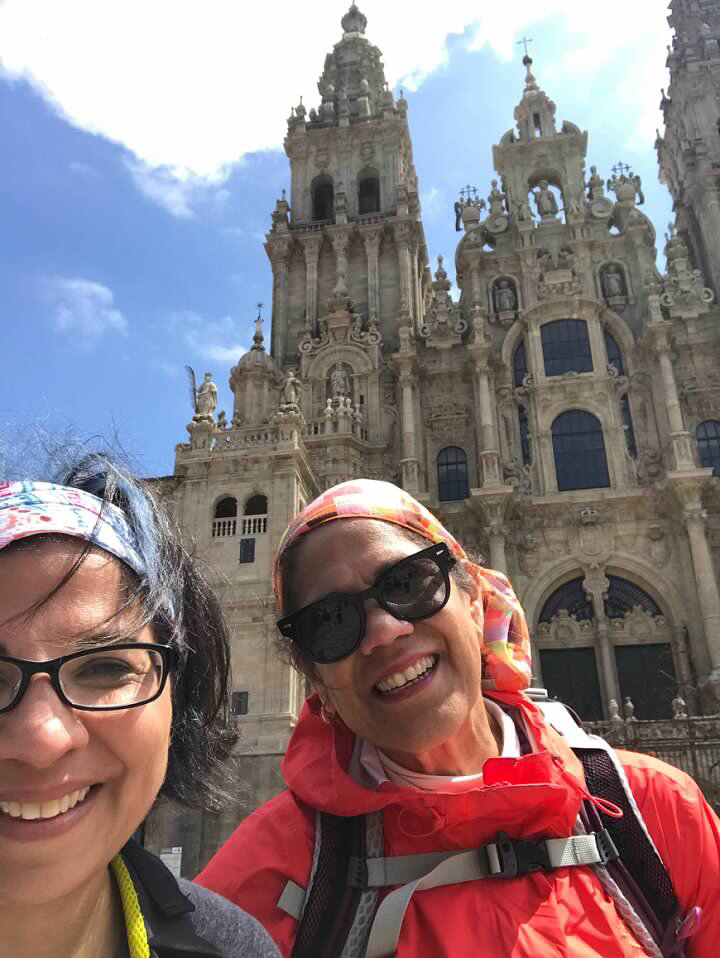
This past summer, my aunt Adina and I walked the last 115 km of the Camino de Santiago de Compostela. A pilgrimage route since the 9th century, the Camino crisscrosses Europe for hundreds of kilometres, its border-crossing routes leading to Santiago de Compostela Cathedral, located in the city of Santiago de Compostela in northern Spain. According to legend, the remains of the apostle James were brought back to the region to be buried, and the massive Romanesque and Gothic church, whose construction started in 1075, was built to house them. Since then, Christians from all over Europe have made the pilgrimage to Santiago, though today, people from all religions and corners walk the Camino in a quest for sport, leisure, or spiritual fulfillment, all valid reasons to embark on the journey.
How my aunt, who is 65 and a lifelong runner, and I found ourselves on the Camino is a long story, as is the story of everyone who decides to do a walking pilgrimage. My quest was spiritual, though definitely not religious: raised as a Catholic in Venezuela, I’m non-practicing today. Still, I can probably trace my desire for the sacrificial aspect of the Camino to the early yearnings of my faith, amplified by mental illness, depression, and the manifestations of that now common-place affliction: the 21st century, professional woman burnout.
My aunt, an extraordinarily hardworking business owner, had also fallen into a deep state of disillusionment and depression after years of neglecting her ambitious, adventurous and fearless nature. Amid all this, tragically, my uncle, my aunt’s dear husband of 30 years, died suddenly of a short illness. Devastated, my aunt feared she would not be able to do it. My needs and desires were no longer relevant, and I knew I would support whatever my aunt decided to do. Forever a fighter, my aunt, her heart broken and her runner’s knee in an out-of-the-blue, excruciating new pain, texted me in all caps one day: We would do it. The Camino beckoned, and as we finalized our preparations, we knew it would be a challenge and, even more importantly, our salvation.
On the morning of our first day, we woke up before dawn. We had carefully prepared our day backpacks to carry only the essentials: a bottle of water, a change of socks, our phones and rechargeable batteries, Vaseline, Band-aids, and anything we may need to care for our feet. I brought a pair of hiking sandals, and my aunt brought a second pair of hiking boots. We carefully chose our clothes, too: light and cool hiking pants, shirts, and thin hoodies.
My aunt had bought two inexpensive, very light but colourful scarves. We were supposed to carry them during our walk and, at the end of our pilgrimage, tie them in a shrine near Santiago de Compostela Cathedral, five days away on foot that first day. Our trip would start in the city of Sarria, each daily route an average of 22 km, with a 28.5 km day in the middle, and would take us along the last stretch of the beautifully maintained Camino Francés, the most popular section of the Camino and a UNESCO World Heritage Site.
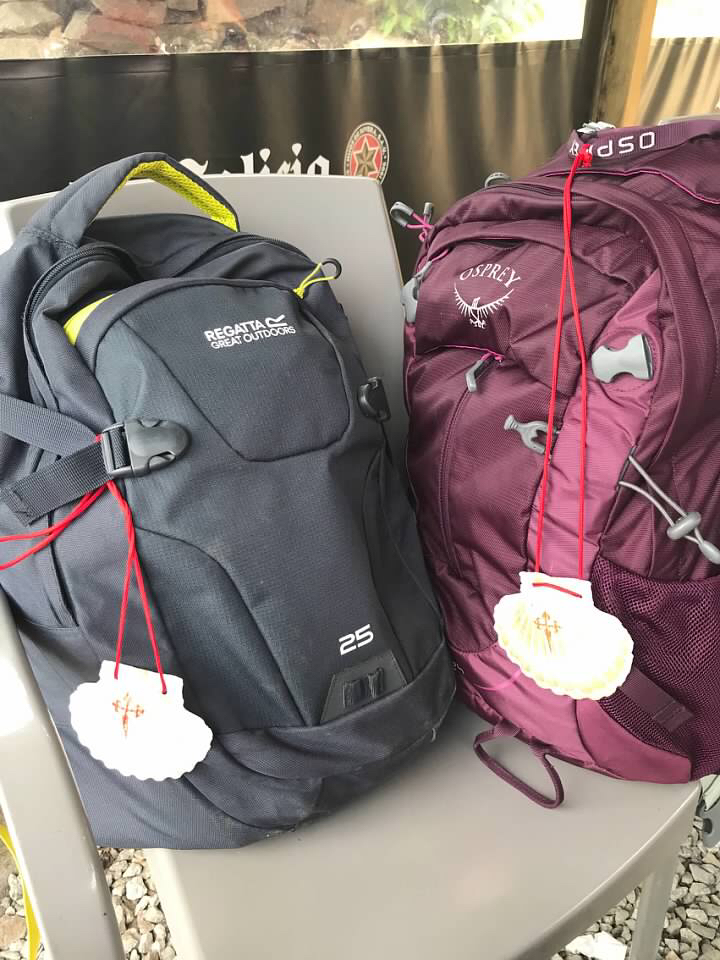
As we got ready that first morning, I tied my scarf to the top handle of my backpack and tied the traditional pilgrim shell we had bought the day before to one of the straps. My aunt was getting ready in the bathroom, and while waiting, I looked out our hotel’s window. The old city street was quiet and empty. I kneeled to check my shoelaces one more time, and the immensity of the moment overtook me. The tears came without warning. I sobbed on top of my shoes and held onto the top of my luggage for support. At that moment, I understood that this dream had lived within me for most of my life, more exactly since I had fallen in love with Goldmund as a 14-year-old.
Goldmund, the beautiful, kindhearted and artistic boy in Herman Hesse’s masterpiece Narcissus and Goldmund, leaves the monastery school where he had hoped to become a monk to roam the hills and forests of medieval Germany, soon abandoning the life of contemplation for which he was destined to lead a life of sensuous wandering and eventually become an artist. Dreams of ancient roads, open fields and blue skies filled my mind, and I cried from happiness and gratitude that this moment had arrived.
Crying from happiness is a privilege; it is a feeling I wish upon everybody. I can count on the fingers of one hand when I have done it. Because of this, each time is clearly imprinted on my memory: twice it was while achieving a professional dream (conducting and publishing two interviews with artists I deeply admired), and once after seeing my family for the first time in nearly two years after I moved to Canada.
Still, this time, it was different. It was as if something primal had been unlocked finally. I understood that while life had taken me to many different places, some challenging paths at times, this moment was a coming home, a return to a place deep and tender inside me. I was now a colleague, a wife, a mother, and a daughter taking care of my parents, but I was still Andreina, 14 years old and with a pure desire in my heart: To walk, to offer myself through some strenuous physical effort, and to find some meaning in this life through that act.
I thought of sacrifice and how, as a kid, maybe nine or ten, in the depth of religious fervour (around the age catholic children prepare for their first communion), I thought I would become a nun when I grew up. At 13, after discovering rock music and becoming increasingly aware of the bounds in which Venezuelan society already kept its women and girls, this idea dissipated, only to be expressed most painfully through anorexia, which tortured my mind and my body until I turned 25. But dedicating my life to devotion, work, and sacrifice continued to appeal to me for a long time.
My reasons were never selfless: it was not the love of God or the need to serve that motivated me, but a mixture of pleasure at the idea of purity through sacrifice and the fear of having to be an active participant in life–the fear of growing up, getting my period, becoming an adult, then sex, motherhood, death–in essence, a precocious fear of mortality. It was and still is, a selfish desire to expiate my guilt, the guilt I’ve felt all my life for being so fortunate, so loved, for being born in peace and abundance, and to understand what I must do with this fortune.
When my aunt exited the bathroom, she found me crying and waiting for her. We gathered our backpacks, stepped out into the empty street and made our way to the entrance of the Camino.
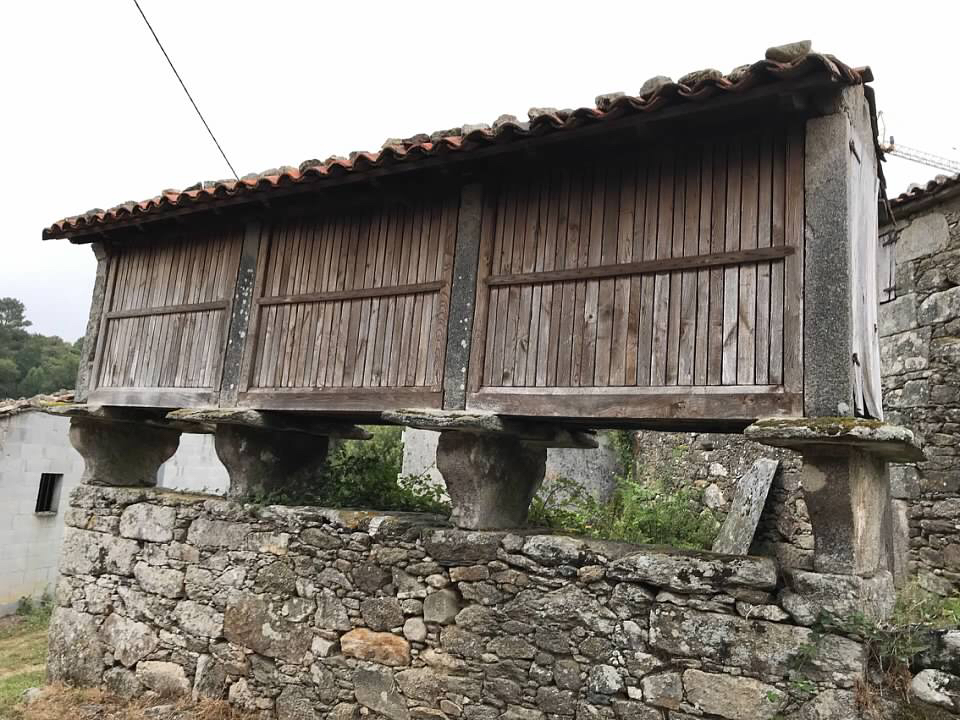
The beauty of the section of the Camino we did is almost indescribable. Galicia, a region in northwestern Spain, is a pastoral dream. Low rolling hills give way to corn fields, small farms, and houses proudly flanked by the hórreos, a small, traditional Galician storage building where farmers store corn, cured meats and other agricultural valuables.
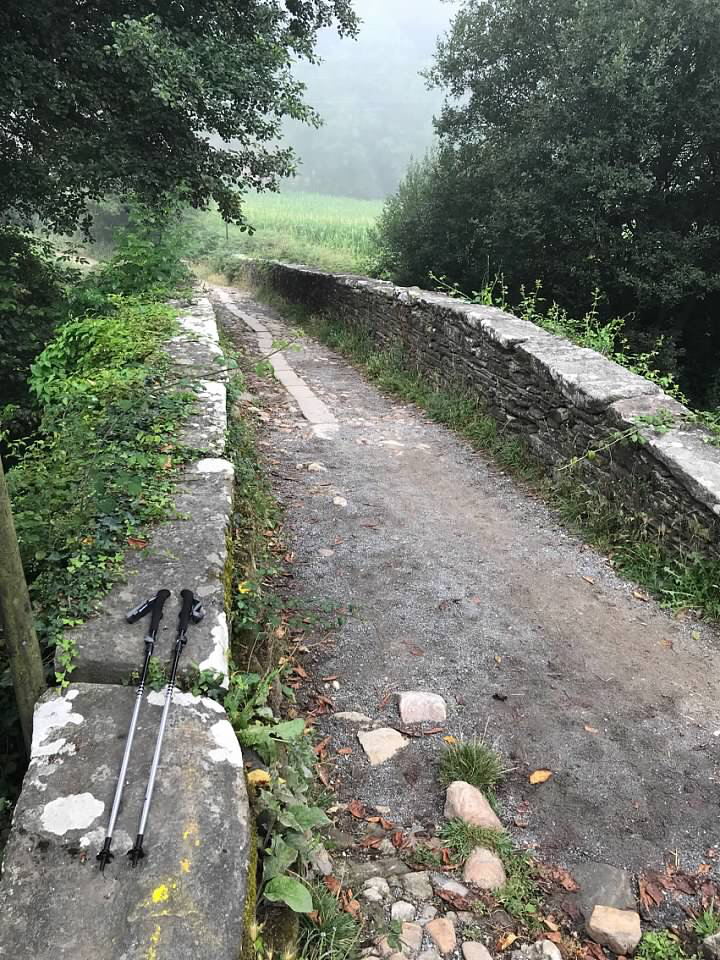
The region is also covered in cool forests, many fragrant with the gentle scent of eucalyptus. Dirt paths transform into stone paths, and old bridges run over cold and musical creeks. Wildflowers cover the fields, and wild blueberry bushes line the sides of the paths. On the first day, we entered an old town, the hórreos proudly marking each house and farm. A woman called me from one of the farms: she was selling raspberries she had just picked. They were delicious, though as they were cool, I doubt they had just been collected. Nonetheless, I ate them heartily, the juice of the raspberries calming the midday thirst.
All day that first day, I returned to a moment in time, imprecise, more of a feeling, that I craved: a mid-morning light, the works of the house well underway, and the sounds of the washing and cleaning of floors and windows reverberating in the air. I imagined all those tasks that took place uninterrupted for centuries in every home and now continued unchanged in the old towns I crossed on the Camino. In my imagination, that first day on the Camino, I could as well have been Goldmund or a real medieval pilgrim offering my life to God– a long, unbroken line uniting that ancient pilgrim’s heart and mine.
A little bit after that, we met Max, a German. He had missed a turn in the Camino and was fast walking away from the right path. We called him until he turned and showed him the right way. “It wouldn’t be the Camino if you don’t get lost,” he said. Indeed, it wouldn’t be the Camino if another pilgrim didn’t help you to find your way again.
The metaphors started to be revealed on and on, kilometre after kilometre; each step, misstep, ache, doubt, and triumph was a new lesson. From the breeze that welcomed us at the top of a particularly steep hill, to the shade that protected us after a long stretch under the sun, to the rocky ground that made us snap from reverie to concentrate on our feet on the path, everything seemed to be intensified and full of symbolism. It was no different with the pilgrims that we passed or passed us by; every pilgrim we encountered appeared to be a lesson, a character that came to enrich our journey and our lives. In a heady high from the uninterrupted hours of meditation and physical strain, the love I felt on the Camino for my aunt, the other pilgrims, and those in my mind’s eye was as real as the pain I felt on my feet after a 25 km walk.
As in life, you must pick your Camino partner carefully. This person will share your journey for hundreds of kilometres, your and their most intimate pains and triumphs ahead of you. When my aunt Adina expressed that she too would like to do the Camino, I didn’t hesitate; she is my mom’s sister and helped raise my siblings and me from the moment we were born. She is our cool aunt, our second mom. So I knew that she and I would be able to do it and that our relationship as aunt and niece would only be enriched.
Although already very close, during the five days we spent walking the Camino, my aunt and I became even closer. I also discovered, sometimes hilariously, that we are opposites in how we interact with the world. But this only united us more as we laughed and compared our world views: hers unflinchingly practical, physical, earthy, and tactile; mine philosophical, intellectual, and romantic.
While I daydreamed about medieval pilgrims sleeping in the hay at the end of a long day, my aunt mentally prepared herself to defend us with her walking pole in case a stranger came out of the woods and attacked us. This drew tears of laughter from both of us for days.
Our approach to the Camino was also different: Hers was a conquering of the land with her body, which, being a runner, she told me, has been her way to understand and move through the world since her youth. Mine was meditation through the exertion of the body, the lessons learned only possible through the luxury of walking several hours and kilometres a day. Still, we were great partners: disciplined, organized, and frugal, confident in finishing our 100 km trek.
The trip also confirmed what I knew before, that my aunt Adina is physically and mentally stronger than anybody I know: despite walking the Camino with a grieving heart and a swollen knee, it was never a question if she would finish – I knew she would, and she did. In my case, I have always been a strong, very fast walker and have never been afraid of physical exertion, though I must admit, not the gym-induced one. I knew I would do it–slow, fast, I didn’t care–I just wanted to give free rein to my body and see where it would take me.
Minute and insignificant in terms of time, the week we spent in the Camino was transformative and life-changing. By the end of the first day, I had developed a dull pain on my left foot that left me crawling, but by the third day, I felt my legs get stronger, the muscles responding with an energy I had forgotten I had. I had reconnected with my body, given it a challenge it was so happy to endure. Day by day, the road got easier, and day by day, my mind got clearer.
Surrounded as I was by the markers of history–a small Romanesque church shadowing its parishioners’ centuries-old graves, a family home built in 1553, now a beautiful inn where we stayed, a stone bridge going over a river, the stones disintegrated from the steps of pilgrims walking over it for almost a thousand years–I finally embraced the concept of mortality. I, too, will disappear; such a simple, clichéd concept, but so powerful when finally internalized.
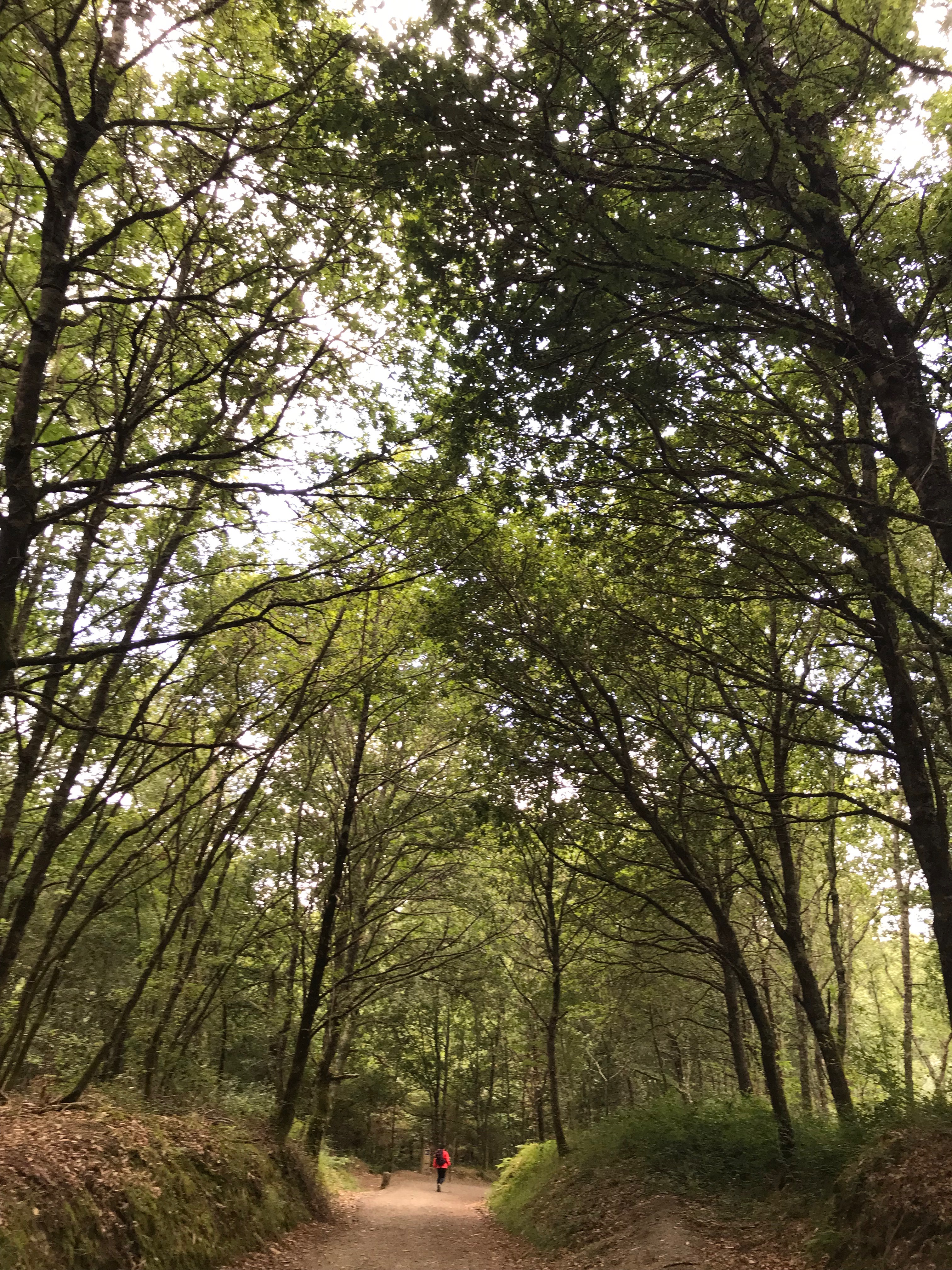
Alone in an old path, a landscape unchanged for centuries, I treasured the silence, the rustling of leaves above me, the sound of my feet on the ground. Nearing the end of the Camino, on our last day, I finally asked the hard questions. Like a miracle, the answer came: I will write. I will explore all the creative urges I have buried deep within me because I needed to fill a premade mould of professional and career respectability.
Goldmund, torn between the ascetic life he thought he was destined to lead and a yearning in his heart to experience life beyond the cloister, had found his purpose through the search for beauty in the mundane, the sensual, the sublime–in essence, in the real world. Like Goldmund, I had found some of my purpose, too: to cherish the beauty of this world and never again neglect it. Honouring this beauty and taking any risks required to protect it. Only this would save me; this beauty protects my soul.

 The Things We Love
I have no words, only tears and applause. Keep going my dear Goldmunda!!!!
Thanks so much for sharing the quote from Hesse…you reminded me to return to his writing for inspiration. Happy trails to you.
Hello Reg,
Thank you so much for reading and commenting. Hesse is a source of endless inspiration, it was when I was young, and it is now 30 years later. Happy reading.
Lo releí por tercera vez , y siempre le encuentro algo nuevo y hermoso. Te adoro Andreina! Hermosa experiencia la cual volvería a vivirla con vos si pensarlo.