Documentary and original soundtrack by j-hope of BTS, available on Prime and TVING.
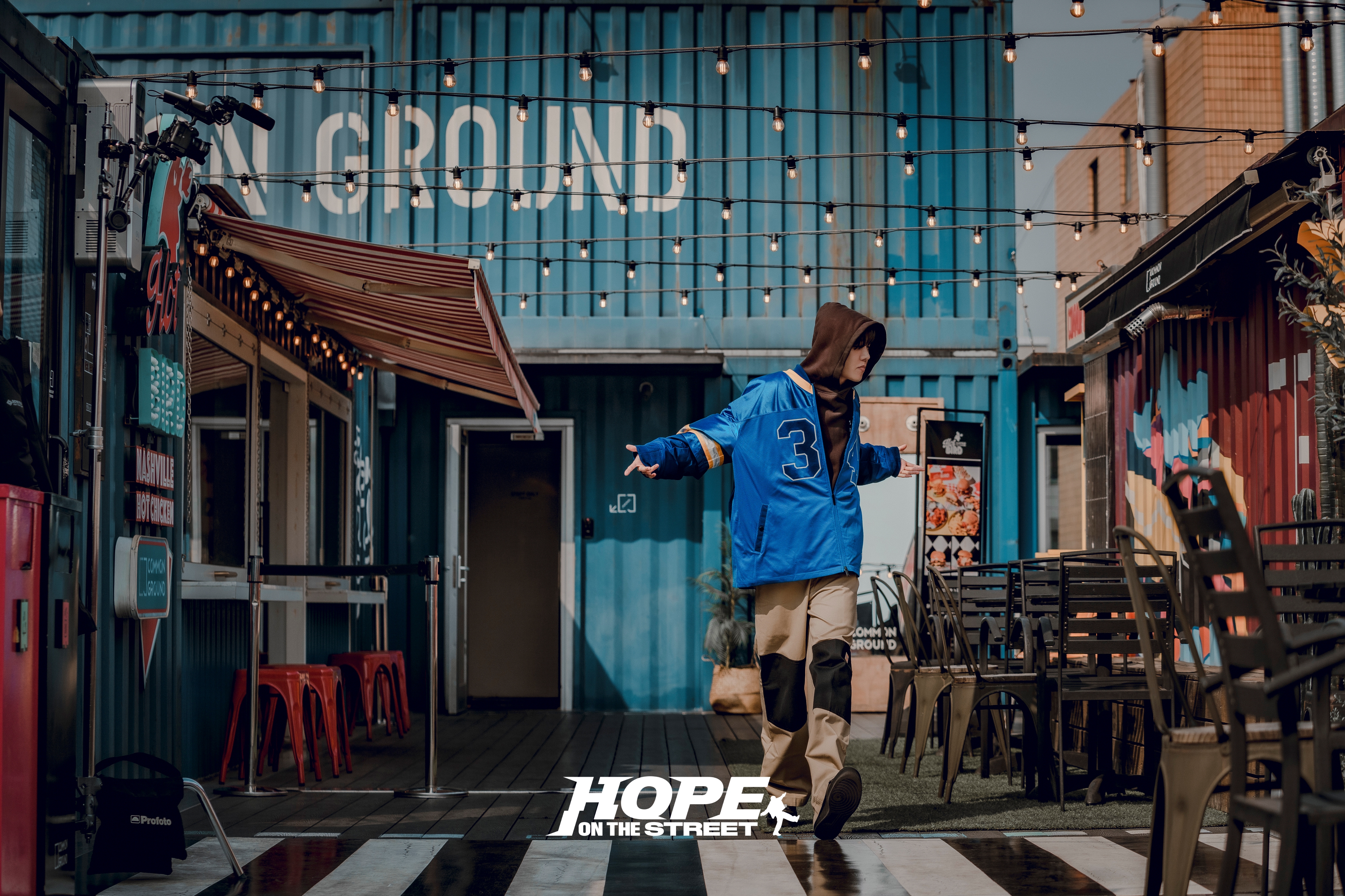
j-hope’s new documentary Hope on the Street and its accompanying original soundtrack, Hope on the Street Vol. 1, mark a new high for the rapper, dancer, and member of the South Korean band BTS. Directed by Park Jun Soo, the six-part series, released on March 27, is an aesthetic and narrative triumph.
Created by j-hope as a final project before enlisting in the military to fulfill his mandatory service, Hope on the Street follows his quest to reconnect with his dancing roots after a decade of building a musical career as a member of BTS. To do this, j-hope calls on one of his first teachers, Boogaloo Kin (Kim Haknam), a South Korean dance champion, to guide him and help him connect with some of the best street dancers and teachers around the world.
In their journey, j-hope and Boogaloo Kin explore a style of street dance in five different cities: Popping in Osaka, locking in Seoul, house in Paris, hip hop in New York, and finally, a return to Neuron, the dance crew he studied with in his teens in his native city, Gwangju. Throughout, Boogaloo Kin accompanies j-hope as a friend, dance teacher and life mentor.
Note: I wrote this essay over several weeks but wrote the main argument and narrative over the next few hours after the event I describe in the piece. I decided to keep it intact to respect and convey the immediacy of the experience.
Last night, I cried myself to sleep after seeing a concert. I cried for two hours after it ended, full-body sobs taking over me on the sofa where I had sat to watch the livestream. The sobs overcame me every time I tried to calm myself, close my eyes, and go to sleep—it was, after all, three or four in the morning my time. I had to take a Tylenol, but the crying took over me in the kitchen as I grabbed a cup of water, opened the faucet, and doubled over the counter in pain.
The sobs did not cease until I forced myself to lay in bed, the tears falling freely on my pillow and my body shaking intermittently from the crying. The sleep somehow came.
The process of creation is painful. There’s a reason why it is often compared to giving birth. There is an inevitability: this baby needs to come out whether we want it or not. The elation, relief, and exhaustion of finally bringing a work of creation into the world resembles the moment a baby is finally out of the womb. In creation, as in birth, fear and sometimes terror are involved.
I thought of all these things when watching j-hope’s new documentary j-hope IN THE BOX, released exclusively on Disney+ on February 17.
j-hope is one-seventh of the iconic South Korean band BTS. A rapper and lyricist who has contributed to dozens of the band’s songs over their 10-year career, j-hope, real name Jung Hoseok, is also the main dancer of BTS. In this role, j-hope has honoured his roots as a young teenage street dancer while elevating many of the styles he’s proficient in into world stages thanks to the success of BTS.
The documentary tells the journey of j-hope’s first foray into solo activities: his first solo album release, Jack in the Box (second after his first mixtape, Hope World, released in 2018), and his preparation for his first solo stage: a headlining show at Lollapalooza, the legendary Chicago music festival, in August 2022.
For BTS fans, called ARMY, the context of this album release and concert is heavy in meaning and symbolism. In June 2022, during their anniversary celebration as a band, Festa, BTS announced the closing of one chapter and the beginning of another: they would pause band activities and embark on solo projects for a while. While much suspected and discussed among ARMY, and to the fans’ dismay, a general public that lacked important context, the reason behind the pause was finally revealed in October: the need for the members to fulfill mandatory military service in their country.
The documentary, however, does not touch on any discussion of the band’s military duty — a topic of contention among many of the band’s fans. Its focus is entirely on j-hope’s vision for his album and the monumental effort of putting together a headlining festival show. Told in non-linear form — the narrative moves back and forth in time from several months before Lollapalooza to days before and then back to weeks before the release of the album — j-hope IN THE BOX is ultimately intimate, intense, and revealing, even for an artist who has been under the scrutiny of the camera eye for the best part of the last decade.
The intimacy and intensity come from j-hope himself. After a brief introduction of j-hope finally coming “out of the box” (like a jack-in-the-box figure) during the opening of his Lollapalooza set, we go back in time to the gruelling days when he was working alone in his studio recording the songs for Jack in the Box.
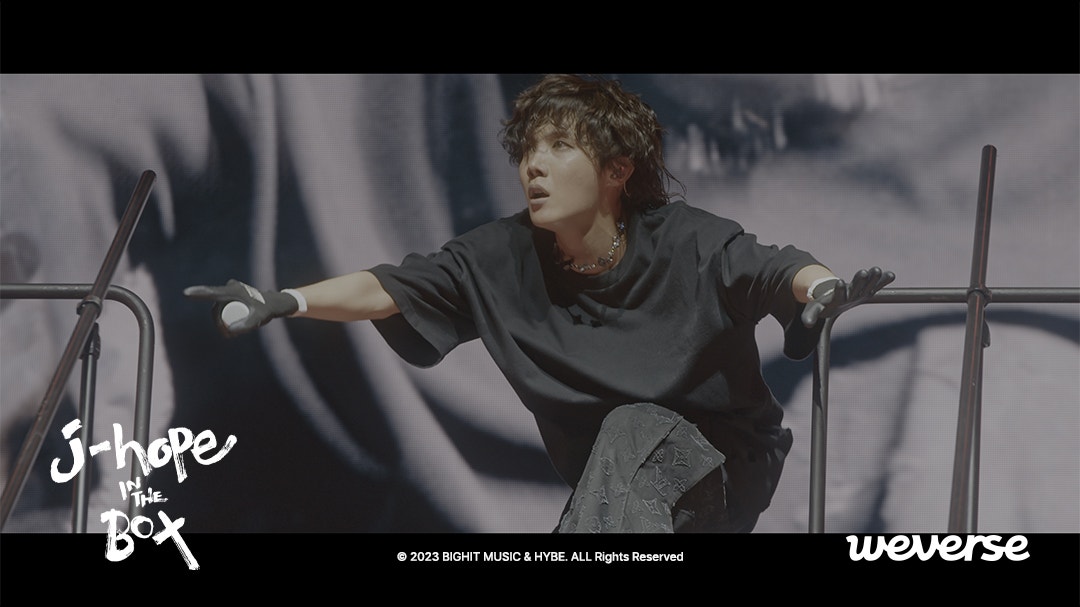
In a fascinating montage, we see j-hope alone in front of his computer recording vocals and ad-libs, typing, thinking, slumped in his chair at moments, a collection of paper cups in front of him. Then the image doubles up, and we see two j-hopes, one dancing in front of the computer while the other types, or one sitting working away while another crashes on the couch behind him talking to his mother. It’s lo-fi, self-recorded footage, and it’s quite moving. It’s the equivalent of a writer showing all the previous, unfinished versions of an essay along with the finished version, the messiness of the process familiar to anybody who has ever engaged in a creative journey.
While not uncommon, the behind-the-scenes musician documentary has become an almost rite of passage (Taylor Swift, Shawn Mendes, Selena Gomez, and Lady Gaga have all released documentaries in recent years), there is a raw and unvarnished feel to that sequence that truly brings home, in a relatable way, what it feels to be consumed by an artistic vision and the need to let it out into the world. Here, bare-faced and tired, j-hope is Jung Hoseok, the writer and musician behind the sunny, brilliantly fashionable persona j-hope represents in BTS.
“This is how you end up in a rut,” j-hope says to the camera. “You don’t know why you’re even doing this. There’s no reason for me to push myself so hard. But I guess this is who I am.”
j-hope working in his studio. Still from the documentary J-Hope in The Box. Photo: BigHit & Hybe.
The sequence is a great example of the type of transparency ARMY has gotten used to receiving from BTS members. They have never been afraid to show the process behind the music and performance, the ugliness of fatigue and self-doubt, or the many failures that make up a success.
And yet, BTS is also intensely private. For a new fan, this paradox is difficult to understand given the thousand upon thousand of hours they have given of themselves to ARMY over the years, not only via regular music promotions such as music videos and interviews, but via personal videos or “lives,” where they chat with fans for minutes or hours at a time, through their long-running variety show Run BTS where they compete against each other in numerous games, their travelling shows, and much more.
The dynamic in those public-facing videos and shows is of a band of brothers working together while loving each other. The bond between the members—its sacredness, its unbreakability—is one of the most magical elements sustaining ARMY beyond listening to BTS’s discography. The music, naturally the core of BTS’ work despite the many prejudices it engenders by being classified as K-pop, is multi-genre, of impeccable quality, wide emotional resonance, and deep lyrical intelligence. A legacy of over a decade of songs that could certainly represent the voice of the first truly global generation.
To see j-hope moving about his creative process and exploring his limits and desires on his own is revealing. It’s a portrait of what it takes to fulfill fiery ambition and creativity, even after an enormously successful career at the top.
“Fame and money don’t mean everything, I already know it. My work makes me breathe, so I want MORE,” j-hope sings in “More,” a moody grunge rap track and one of the two title songs in Jack in the Box. Ambition and drive are also two of the main themes of Jack in the Box, and it’s appropriate that the documentary let us in this crucial moment of j-hope’s life.
Another moving and important moment in j-hope IN THE BOX is when j-hope visits his family in Gwangju, a city in the south of the country, where he was born.“Safety Zone,” a gorgeous R&B track from Jack in the Box, plays in the background.
“Where’s the ray of light to relieve me in the darkness? Is it a tranquil home? Or the blue that is far, far away? Where’s my safe zone,” the lyrics say as he gets out of the car to photograph the woods or when he talks about his band members on the way there. At home, he is welcomed by his parents (we hear them and see them at the margins of the frame only), who have filled their home with mementos and photos of their son’s career.
The contrast between this j-hope—safe, protected, nourished with food and love by his parents—and the one we will soon see commanding a huge stage in front of thousands of people is truly staggering, not so much in how j-hope himself behaves, but in showing the extraordinary psychological leap artists at a certain level must make to inhabit their artistic selves. What’s beautiful and telling in j-hope IN THE BOX is that we are full witnesses to the transition from person to performer he must make.
In between, we see the toll it takes: as the performance draws near and j-hope works with musicians and dancers during rehearsals, he becomes increasingly nervous. Consumed by hyper-concentration, he can’t eat or sleep— a marathon runner numbing the exhaustion in the last couple of kilometres before finishing a race. It’s almost agonizing to watch.
Thankfully, the documentary also intersperses footage of his performance at Lollapalooza, or Hobipalooza, as the concert was nicknamed by ARMY. Boasting an incredibly satisfying sound mix, these are some of the best moments of the film, where we get to see and hear the results of j-hope months-long labour.
His performance of “Equal Sign,” a gorgeous and moving song where j-hope expresses some of his most personal values about equality, peace, and solidarity, is an unforgettable musical moment. As he sings the English chorus, and 70,000 fans sign back to him the word “same” with one voice, it is cathartic and emotional.
Some of the lyrics of “Equal Sign,” by j-hope. Photo: screen capture Doolset Bangtan Lyrics
Throughout, one more aspect of j-hope’s character shines: his deep collaborative and respectful nature. We see it in how he greets every staff member at his Jack in the Box listening party in Seoul, attended by a who’s who of South Korean artists and celebrities, or by how he greets each band member or backup dancer in his crew. It’s not as if this is anything new; BTS is known to be the utmost professional among industry peers, but it is still admirable and wonderful to witness.
Finally, anytime a BTS member appears next to another, the fun and warmth of any solo member or group activity double or triples accordingly. j-hope IN THE BOX is no exception. The moment Jimin, j-hope’s bandmate and fellow dancer, travels from South Korea to support his solo concert debut, the film’s mood shifts as if the sunshine has finally appeared. Jimin’s presence has a deeper meaning too: only somebody who has experienced what j-hope is going through can truly understand what he’s feeling.
Although j-hope IN THE BOX was made very much with BTS fans in mind, it does serve as a compelling introduction to j-hope’s solo and group music. Most of all, it is the record of a moment in time for j-hope, an artist who has reached unimaginable heights but one who we suspect, will just continue to soar.
j-hope IN THE BOX is available for streaming on Disney+.
Last May, annual inflation in Venezuela reached 24,600 percent. In one abstract, swift declaration, my mom’s monthly university professor salary became the equivalent of a dozen of eggs, or $2.70 US.
When I was 18 years old, I quit university to dedicate myself to music exclusively. I had been studying piano and cello since I was 8 or 9 but had only gotten more seriously interested, if not confident, as I got older. I studied at the Conservatory of Music in Maracaibo (Venezuela), a revered institution among all musicians in the city. Apart from some serious heartbreak that I was going through at the time, those months of intense focus and dedication to my instruments were some of the most satisfying of my life. I gave myself a rigorous practice schedule and took to it almost immediately. Discipline can give you great pleasure, in particular through the feeling of mental and physical control it gives you. Every day, the slowly won victories–mastering a difficult exercise, moving from painfully learning a piece to being able to play it with feeling–gave me hope and kept me going.
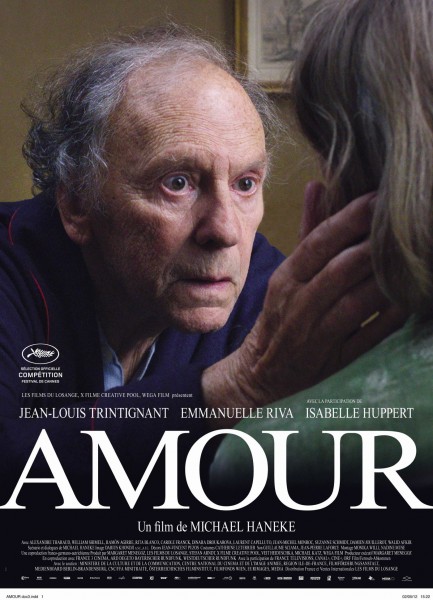
Sooner or later, our bodies betray us. Amour is a story about such a betrayal, a dignified film about the undignified cruelty of long illness and death.
In a world of cliché movie love stories, along comes Corazón de León, a hilarious and unusual love story about a woman trying to overcome a world of prejudice and fear.
First love—passionate love—is the ultimate feeling, if there is one. Blue Is The Warmest Color is a story about the intense and life-defining experience of a first love. It’s a beautiful, highly sensual film directed by Abdellatif Kechiche. In 2013, it won the Palme d’or at Cannes.
After suffering through months of hype, last weekend, I finally saw 12Years a Slave, the newest film by British director Steve McQueen. It tells the true story of Solomon Northup, a New York musician who was kidnapped and sold as a slave in 1841. Adapted from Northup’s 1853 memoir of the same name, the movie chronicles in detail the horrors Mr. Northup had to endure during his 12 years as a slave in the Deep South.
The call of the sea. It promises solitude, adventure and a profound connection with nature both at its most beautiful and peaceful and at its most awesome and terrifying. All Is Lost, a new film by J. C. Chandor, fulfills all these promises while offering a compelling commentary on the indifference of nature and of humans.





 The Things We Love